Tourist Fakes |
|||||||||
 |
 |
||||||||
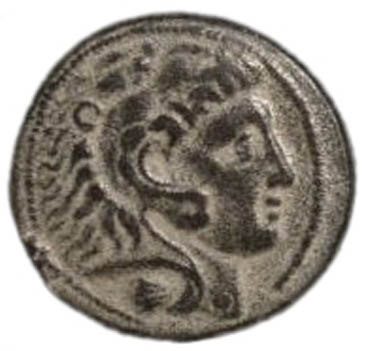
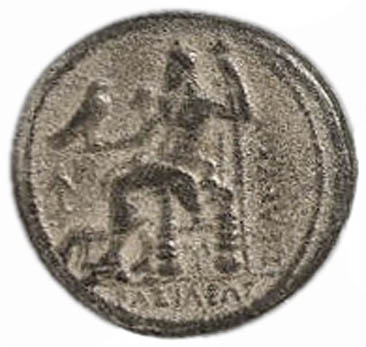
| Modern cast forgery of Alexander III tetradrachm, 14.5g. This piece is almost a dictionary definition of tourist fake, a cheap, unconvincing sand-cast forgery capable of fooling only a tourist or other person not knowledgeable about ancient coins. This particular piece is a cast forgery made of a base metal (likely bronze), with indistinct details, pitted surfaces, edges filed flat, and a soapy, powdery looking finish. I bought it for $2 from a dealer who said he had bought it as a fake along with others from someone who had bought it abroad from a seller claiming that a farmer had found it in his field. It's similar to Price 3942, a posthumous tetradrachm from Ekbatana c. 295-280 BC. | |||||||||
"Tourist fakes" are forgeries done so poorly that typically only a tourist, without knowledge of ancient coins, would be fooled. Many such counterfeits are in fact sold as authentic coins in tourist areas of Mediterranean, Balkan, and Middle Eastern countries. The most common line is that they were found by a farmer in his field. |
|||||||||
 |
 |
||||||||
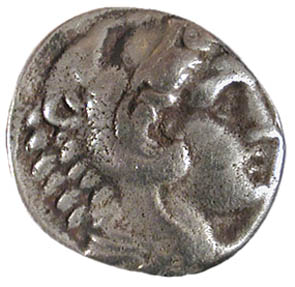
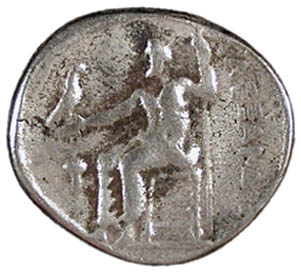
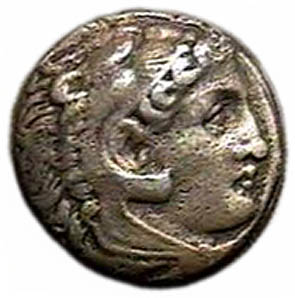
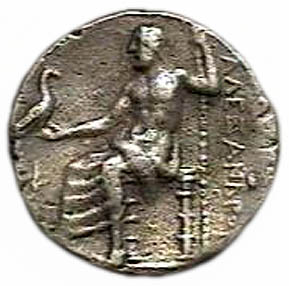
| Modern cast forgery of Alexander III tetradrachm, 14.0g. Here's a run-of-the-mill cast forgery, lightweight and with indistinct details and pitted surfaces. The edge is fairly convincing, though, with no obvious casting seam or filing marks, and it appears to be made of silver. In an online authenticity test I conducted, most people were fooled by this piece, no doubt because of the piece's heavily worn and convincingly toned appearance. The piece copies Price 29, a lifetime tetradrachm from Amphipolis. I bought it at one of the ANA's World's Fair of Money shows from a British ancient coin dealer who was trying to sell a large bag of about 500 ancient coin forgeries as forgeries and who let me cherry pick this one. I bought this early on in my study of Alexander coinage and forgeries and paid $25 for this fake, too much. | |||||||||
 |
 |
||||||||
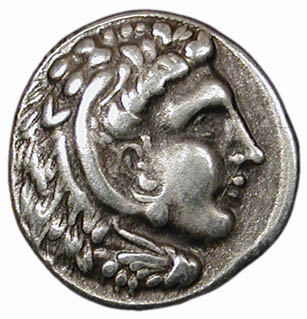
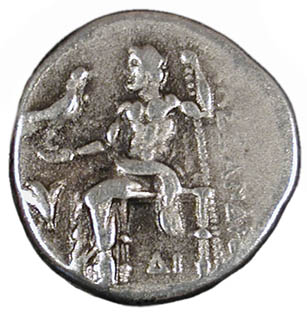
| Modern cast forgery of Alexander III tetradrachm, 15.0g. This is a similar piece as the previous one, another run-of-the-mill cast fake with indistinct details and pitted surfaces but no casting seam. It's a copy of a posthumous tetradrachm from Pella. I bought it as a forgery on eBay for $11. | |||||||||
 |
 |
||||||||
| Modern cast forgery of Alexander III tetradrachm, 8.9g. Here's a very lightweight cast forgery, with remnants of a casting seam. It appears to be made of pewter. It's a copy of a lifetime tetradrachm from Memphis, Price 3971. I bought it on eBay for $20. | |||||||||
 |
 |
||||||||
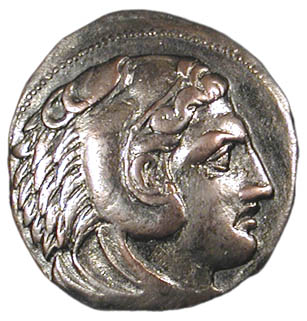
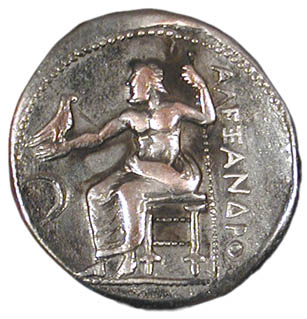
| Modern cast forgery of Alexander III tetradrachm, 11.0g. Another version of this same fake weighed 14.3g. One eBay seller was offering this same type for sale as a replica, describing it as having been packaged with a book about Aristotle from the 1960s, though he could provide no further details. | |||||||||
 |
 |
||||||||
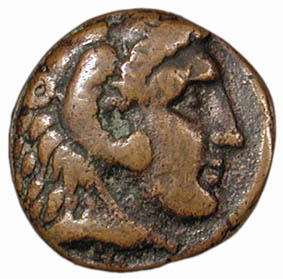
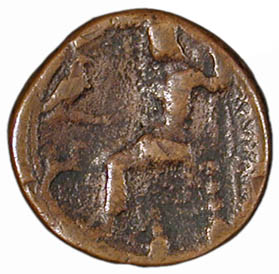
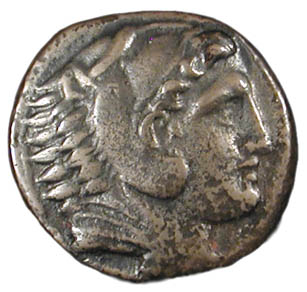
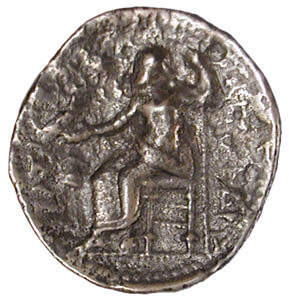
| Modern cast forgery of Alexander III tetradrachm, 13.1g. This is a tourist fake in bronze, a cast fake with indistinct details and pitted surfaces. | |||||||||
 |
 |
||||||||
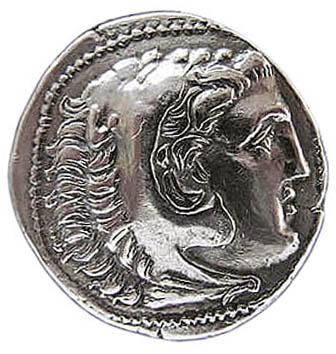
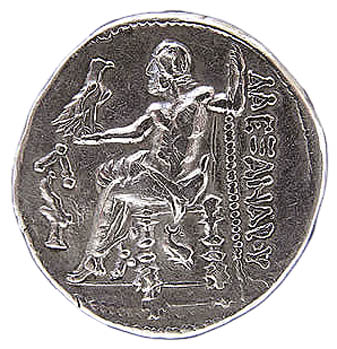
| Modern cast forgery of Alexander III tetradrachm, 13.4g. Here's another tourist fake in a base metal, in this case possibly pot metal. This alloy is sometimes created by the actual melting of old pots. It can consist of tin, lead, and copper. In ancient times, the Celtic tribes of eastern Gaul used a similar alloy for their official coinage, though these coins may have also contained small amounts of silver. We use the term "potin" for this alloy today, which is the French word for "pot metal. | |||||||||
 |
 |
||||||||
| Modern struck or pressed forgery of Alexander III tetradrachm, 18.6g. This piece, the photo of which was emailed to me, was sold by a Bulgarian direct seller as an authentic coin. The piece undoubtedly looks more convincing in hand than it does in this photo. The buyer sent it to the British Museum, which confirmed his suspicions that it was a fake, and he returned it successfully to the seller for a refund. The significantly excessive weight alone gives it away, while the reflective surfaces and flat fields are also anything but authentic. The legend is blundered and the styling is off as well. It copies Price 487, from Amphipolis. | |||||||||
Other glomworthy coins:
Coin sites:
Coin Collecting: Consumer Protection
Guide
Glomming: Coin Connoisseurship
Bogos: Counterfeit Coins
Pre-coins
© 2013 Reid Goldsborough
Note: Any of the items illustrated on these pages that are in my possession are stored off site.