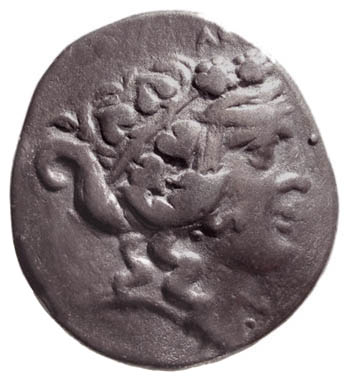
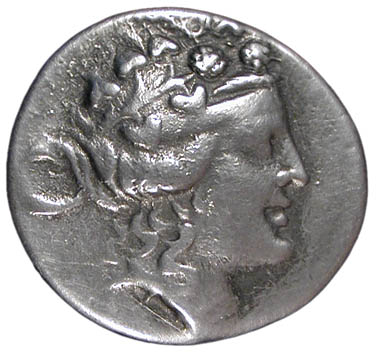
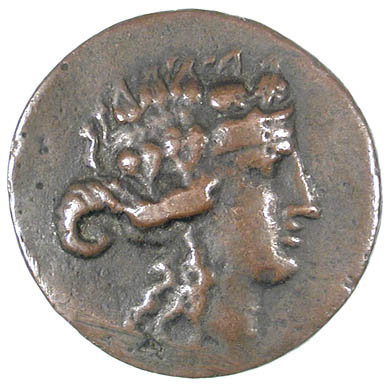
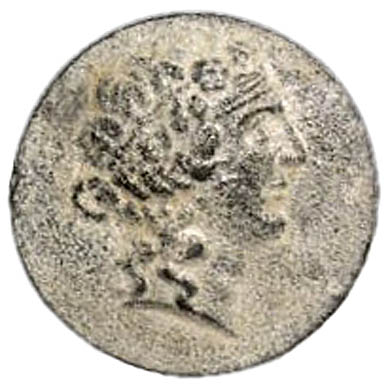
| Thracian tetradrachms, often called barbarous imitations of Thasos tetradrachms
and minted by the indigenous Thracians in the first century BC, varied greatly in style, which makes it relatively
easy for modern counterfeiters to produce forgeries of them. Some argue that counterfeiting isn't a big problem with relatively inexpensive coins such as these. But as Wayne Sayles pointed out in his 2001 book Classical Deception: Counterfeits, Forgeries and Reproductions of Ancient Coins, you can no longer assume that it's impractical for someone to make deceptive fakes of inexpensive coins, including someone living in relative poverty in Eastern Europe who may have advanced engraving skills or even a university degree in metallurgy. Others have argued, however, that modern counterfeiting of Thracian tetradrachms isn't a serious problem because the market for authentic specimens is fairly narrow. With fewer collectors of these coins than Roman or Greek coins, there's little incentive for forgers to invest the resources needed to make truly convincing fakes. Still, fakes do appear. A number of modern forgeries of Thracian tetradrachms reportedly surfaced, for instance, at the 1997 ANA World's Fair of Money in New York. These fakes were all very high grade, with no obvious wear, and were made from many different obverse and reverse dies. In contrast, with an authentic hoard of mint state ancient coins you would normally expect to see a fair amount of specimens made from the same die. Also, the designs of these fakes were all simplistic, the flans were unusually flat, and the patinas were mottled, dark, and superficial. A number of fakes also reportedly surfaced at a San Francisco International Coin Exposition in the mid-1990s. Chris Rudd, a British Celtic coin expert and dealer, says he doesn't normally stock Thracian tetradrachms in part because of the number of counterfeits that are circulating. Rob Freeman, a U.S. Celtic coin expert and dealer of ancient coins and artifacts, says there has been a "rash" of forgeries of these coins recently, typically with oversimplified geometric styling and made of base silver. He has heard that the metal may be from melted-down early modern Turkish coins or possibly even from dental amalgam used for tooth fillings (which consists of about 50 percent mercury along with silver, copper, tin, and zinc). Ilya Prokopov, who has just coauthored a booklet titled Modern Counterfeits and Replicas of Ancient Greek and Roman Coins from Bulgaria, said in an e-mail message to me that concerns about Bulgarian forgeries of these coins are "quite realistic." Of the photos of 192 forgeries and replicas in this booklet, 77 are of Thracian tetradrachms, though many share the same obverse or reverse die. The authors believe that all of these particular fakes were made by the same forger, who is identified only as "Sofia I." The 76-page booklet is available for about $20 from one of the Bulgarian coauthors, Evgeni Paunov <vpaunova@dimont.com>, or from Jerry Walker <jwalker@vcoins.com> in the U.S. All the authentic Thracian tetradrachms pictured at this site passed muster when looked at by an ancient coin dealer and expert in Celtic and other imitative coins who has handled many hundreds of these coins over the years. |
|||||
|
|
 |
||||
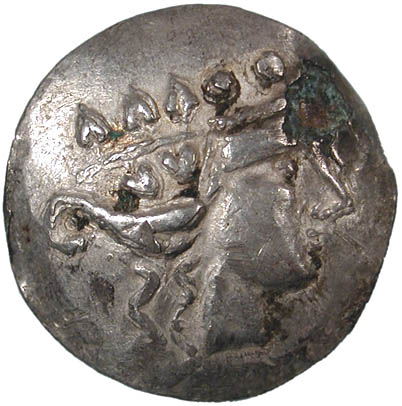
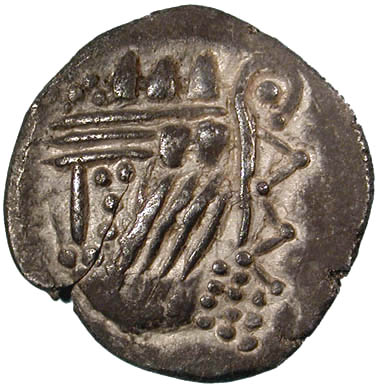
| "Snake." The reverse of this specimen is among the most abstracted Thracian tetradrachm reverses, with Herakles nearly indistinguishable. The four circles around central dots on the reverse may be sun symbols. The horizontal club is reminiscent of the club on the reverse of Macedonian tetradrachms issued under Roman rule in the second and first centuries BC. On the obverse, Dionysos has snake-like hair. 16.1g, 32mm. Göbl Class V, cf. Lukanc 1889, 1890. | |||||
| Sometimes the authenticity of a coin isn't clear. Dave Liebl, a collector
who specializes in Thracian tetradrachms, bought a specimen of a variety that may have only recently reached the
market. The coin above that I've labeled "Snake" is another specimen of this same variety. It doesn't
appear in Lukanc, but the reverse is similar to Lukanc 1889 and 1890. Libel bought his specimen from a respected
dealer but later questioned its authenticity when he noticed it was an obverse and reverse die match to coins offered
for sale by two auction houses. The seller he bought it from offered to take the coin back. Two dealers who have experience with Thracian tetradrachms that I talked with, who have examined this variety in person, feel it is questionable. Both indicated that their questioning is based primarily on gut feelings rather than hard evidence, and they therefore asked that their views be anonymous about this particular topic. One said he has seen many of these types struck from the same dies with the same areas of striking weakness from one specimen to the next. He feels that someone may have developed a sophisticated procedure for making these, and he surmises that there may be one consignor of these pieces for the sales in which they've appeared. Another dealer pointed to the "weird" fabric, with the silver appearing to be a bit debased. On the other hand, Prokopov believes coins of this variety are authentic. Perhaps the publication of these concerns can spur further investigations into this variety to put to an end any authenticity questions or reveal this variety for what it is. As yet, there is no proof that these coins are anything but authentic. |
|||||
|
|
 |
||||
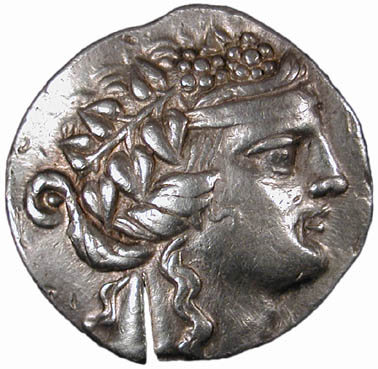
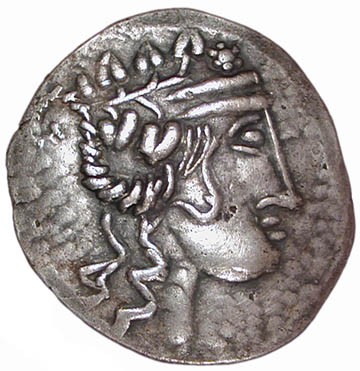
| "Strong Man." Dionysos is bearded and has a hook nose and muscular face on this deeply curled Thracian tetradrachm. 14.3g, 31mm. Göbl Class V, Lukanc -. | |||||
| I was also suspicious of the above Thracian tetradrachm, labeled "Strong
Man," feeling it might be a modern counterfeit made of a non-silver alloy. It's slightly lightweight, at 14.3g,
but has thick edges and a medium-size flan, along with being covered with a dark patina and being a variety not
included in Lukanc. None of this, however, is conclusive in itself. So I sent the coin out for a non-destructive x-ray elemental analysis with a scanning electron microscope. This is a useful if not infallible test that analyzes the elemental composition of a coin, but only at its surface to a depth of a few micrometers. The coin is bombarded with electrons, producing x-rays. Because each element has a unique x-ray signature, it's possible to detect which elements comprise the coin's surface, down to a sensitivity of about 0.1 percent (trace elements may not be detected). The surfaces of this coin turned out to be made of silver after all and to be coated with silver sulfide (toning). Though I didn't think the coin was a fourree, I decided to probe this anyway with specific gravity testing. Because bronze, which is typically at the core of fourrees, is less dense than silver, a silver-looking coin with a low specific gravity may be plated or debased. Specific gravity testing is another tool that's helpful but not infallible. When comparing a coin's weight in air with its weight in water, accuracy can be compromised by tiny air bubbles adhering to the coin's surface, internal porosity, and voids within the coin's interior. The measurement of this coin's specific gravity turned out to be 10.2, which is close enough to 10.5, the specific gravity of silver, to rule out the likelihood of it being silver-plated bronze. The specific gravity of copper is 8.9, bronze 8.7-7.8 (varies with how much tin, lead, and other metals it's alloyed with), tin 7.3, lead 11.3, and gold 19.3. The specific gravity of Roman Republican fourrees, which were issued slightly before the time of Thracian tetradrachms, is typically under 9.0, according to Richard Schaefer, a collector currently undertaking a study of Roman Republican coinage. The possibility still exists that the coin is silver-plated with a lead alloy interior, but it's unlikely. Though I questioned my coin, it turns out that in all likelihood I was wrong and that the coin is authentic, which I suspect happens frequently among collectors. |
|||||
|
|
 |
||||
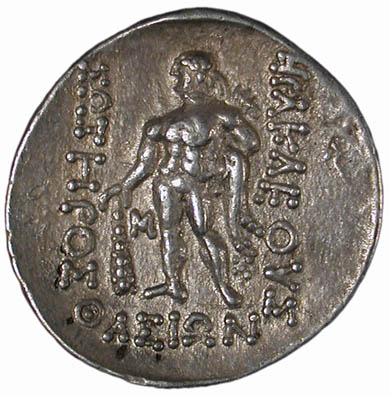
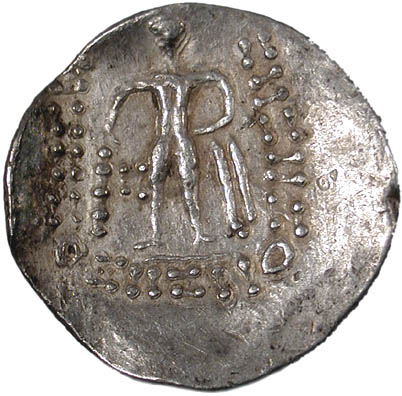
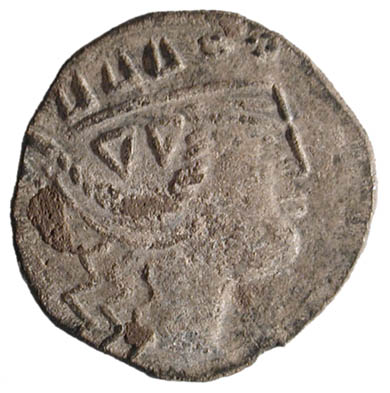
| Above: “Skin Deep 1.” This is an ancient plated counterfeit, or fourree, specifically
a silver-plated bronze contemporary forgery. The breaks in the plating near the edge between four and five o'clock
on the obverse reveal it for what it is. The coin is in the correct weight range, with its thicker flan accounting
for this. 16.6g, 33mm. Below: "Skin Deep 2." Here's another fourree with broken plating, around 2 o'clock on the obverse. It reveals a green "eutectic" layer separating the silver from the bronze, then a bronze core. The coin is a tad light but close to the typical weight range, a deceptive ancient fake. This specimen was part of the collection of Dave Liebl. 14.1g, 35mm. |
|||||
|
|
|||||
|
|
 |
||||
| Counterfeits were made in ancient times as well. Contemporary (ancient) counterfeits, the silver-plated fourrees, of Thasos, Thasos-type, and Thracian tetradrachms occasionally show up on the market today. You can often spot them by breaks in the silver plating, as with the specimens pictured above labeled "Skin Deep 1" and "Skin Deep 2." Fourrees are typically lightweight, the bronze core being less dense than silver, though some fourrees have a lead or lead alloy core or are slightly larger in diameter and thickness, and they can thus be the same weight or even heavier than coins of good silver. | |||||
|
|
 |
||||
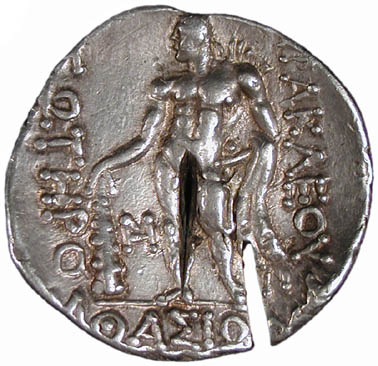
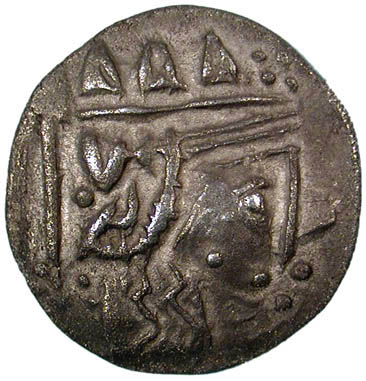
| "Eunuch." Some Thasos, Thasos-type, and Thracian tetradrachms have a test cut at the coin's edge, to test the interior metal. Others have a cut that's dug into the obverse or reverse surface. This particular specimen has both types of cuts, and the reverse cut seems deliberately designed to emasculate the mighty Herakles. I've seen other Thracian tetradrachms with this same castrating cut. Was somebody sending a message to those worshipping Herakles? 16.8g, 32mm. Göbl Class II, Lukanc 111. | |||||
| Because of the presence of counterfeits in ancient times, many coins were test cut with a chisel to test the integrity of the interior metal and determine if they were authentic, as was the above specimen labeled "Eunuch." | |||||
|
|
 |
||||
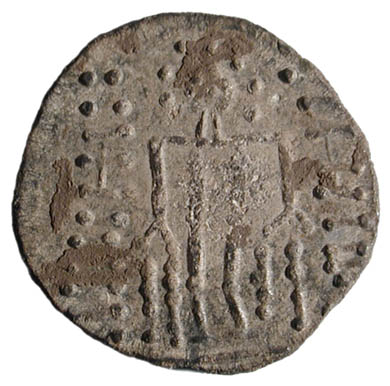
| "Leadbelly." With this specimen, the angular Dionysos and stick-figure Herakles are weakly struck, as is typical with this variety, made of a lead and silver alloy or a lead and clay mixture. 12.7g, 28mm. Göbl Class VI, cf. Lukanc 1624. | |||||
| Also interesting are contemporary Thracian tetradrachms made entirely of
a lead alloy or mixture, typically lead and silver or lead and clay, such as the one pictured above labeled "Leadbelly."
In the past there was some debate about whether these coins were contemporary counterfeits, but the coins are small,
thin, and flat and make no pretense of being of good silver. They may have been used because they were less costly
to produce or because of a shortage of silver, and they likely had a lower denominational value than other Thracian
tetradrachms. Just as ancient coins in gold, silver, and bronze are counterfeited today, these lead issues have
been counterfeited in modern times as well. Eugeni Paunov informed me through e-mail that 80 to 90 such counterfeits
were made in Sofia, Bulgaria, during the winter of 1998/99 using round lead bullets from Ottoman-period rifles. The reality with ancient coins is that counterfeit detection is not an exact science, that some forgeries do make it past honest dealers and experts, and that collecting ancient coins isn't and has never been risk-free. But the inevitable existence of forgeries shouldn't deter you from enjoying these or any other ancient coins. The number of fakes on the market is dwarfed by the number of genuine ancient coins, which were produced in staggering numbers. The best protection is buying from reputable dealers, auction houses, or fellow collectors who offer a lifetime guarantee of authenticity with return privileges or handling enough coins to safely buy closer to the source. What follows are additional images of ten modern counterfeits of these coins, plus two modern replicas. |
|||||
|
|
 |
||||
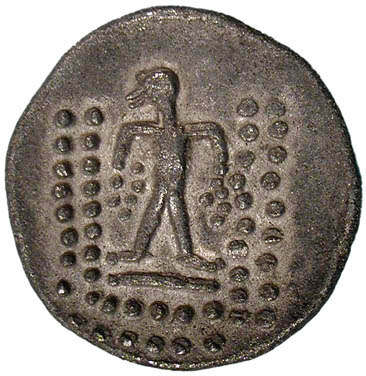
| "Faker 1." Here's a superficially convincing modern struck counterfeit of a highly abstracted Thracian tetradrachm, with the obverse and reverse designs attractively styled. The weight is at the high end of the normal range. One diagnostic is the absence of evidence of cleaning, of the removal of encrustations or horn silver, as typically happens with authentic coins. There is evidence of artificial toning, with golden coloration in the coin's recesses, which can happen with coins stored in the air but doesn't happen with coins dug up out of the ground, as this coin allegedly was. The gray flan may consist of debased silver made from melted-down 19th and 18th century Turkish coins, according to one expert who has studied these fakes. 17.0g, 32mm. | |||||
|
|
 |
||||
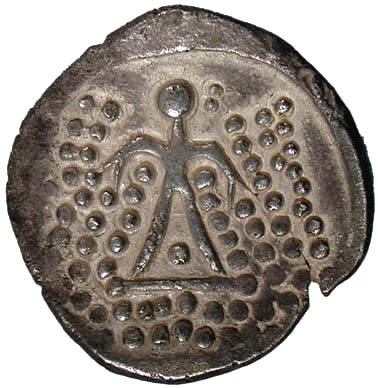
| "Faker 2." This is the same type of fake as the above and appears to have originated from the same hand, though the fabric is somewhat different. The obverse has a realistic flan crack and in general is well done, with the design being artistically abstract. One observer looking at this page remarked that this and the previous coin lack a strong sense of composition and balance. Still, they're interesting pieces of numismatic deception. This particular forger is talented, though he's wasting his time on junk like this. | |||||
|
|
 |
||||
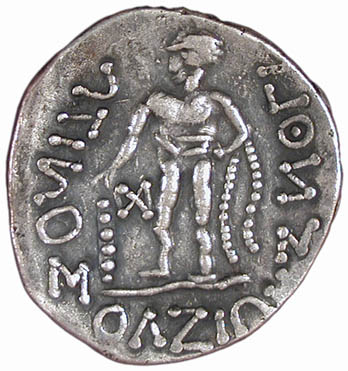
| "Faker 3." This forgery has uniform fields and dark, mottled, artificial-looking toning. Its surfaces appear to have been acid-treated to give them an old look. The styling is attractive and, with the wide diversity of authentic styling on Thracian tetradrachms, convincing enough. 16.6g, 32mm. | |||||
|
|
 |
||||
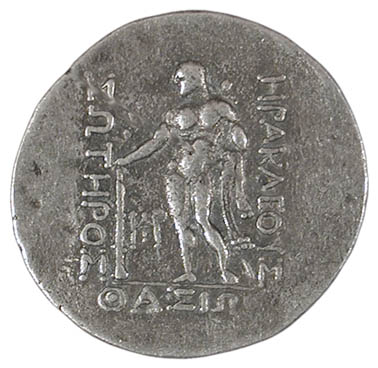
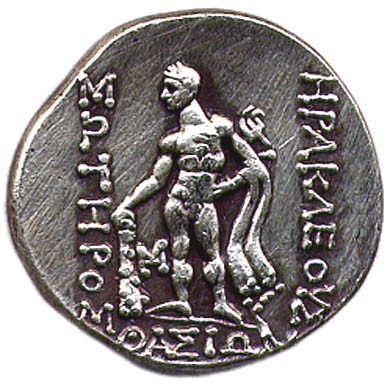
| "Toronto Faker." This is a lightweight cast fake, one of the forgeries
of the notorious eBay Toronto Forger, who's sometimes known as the "Toronto Group," though there's no
indication that more than one person was behind this scam. Like all of his fakes, this one is unconvincing in hand.
Along with it being lightweight, its surfaces exhibit small casting pits, and the edges are marked by traces of
a seam. The piece rings when you tap it with another coin, indicting a high silver content and that the silver
is modern, not ancient. The artificial toning is well done, and with the small photos that the forger used, the
nature of the piece isn't as obvious on screen as it is in hand. 11.4g, 32mm. The Toronto scammer has operated on eBay for more than three years, and continues to do so, cheating perhaps 500 people out of $500,000, estimating conservatively. An ancient coin dealer from England was cheated with the forgery pictured above, one of nine he bought from the Toronto Forger before he discovered they were forgeries, a lesson that cost him 450 pounds ($860). A person from the Toronto, Canada, area, who also operates from a London, England, presence, puts up on eBay several dozen cast fakes at a time with each round of his scam auctions, typically the same fakes each time, often but not always the same photos. He has created more than forty rounds of scam auctions, using a different eBay I.D. each time. Each time eBay cancels his I.D. (NARUs him, for Not a Registered User), after people knowledgeable about the scam complain, but almost always not until after the auctions are over and some percentage of people already paid. The Toronto scammer typically creates three-day auctions so as to minimize the time people have to complain to eBay before the auctions close. He also changes the category of his auctions from some other category to ancient coins within 24 hours before the auctions close, also to avoid tipping off knowledgeable people in time for them to alert eBay. When it discovers a new round of scam auctions, eBay sends email to the people who "won" the auctions, but its intent here is to try to absolve itself of responsibility. The emails it sends contains the following language: "eBay is only a venue, and we cannot guarantee that sellers will complete transactions nor can we guarantee the delivery or quality of bought items." The scammer almost always creates private auctions, meaning interested persons can't warn bidders. Despite the fact that this is against eBay rules, which are designed to protect the sellers who pay eBay its fees, this is a key way bidders are protected from scams such as this. One lesson is that you should never bid on a private eBay auction unless you know the seller and know he has a good reason for keeping his auction private. It's also a good idea to ask around about any eBay seller you don't know. Don't expect eBay to protect you. It typically doesn't even read the emails it receives from people telling it that a seller is breaking eBay's own rules. Instead, it just sends back an automated response. On a positive note, it has been faster lately in taking down the scam auctions of the Toronto Forger. You can find a catalog of the Toronto forgeries here. |
|||||
|
|
 |
||||
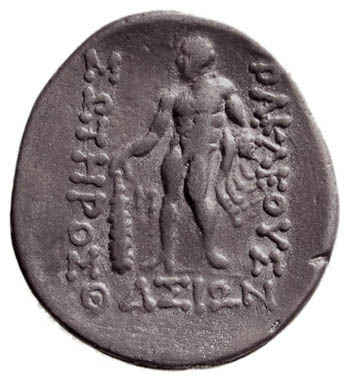
| "Beirut Faker." This is a Beirut School forgery, frequently sold on
eBay. The seller claims that he is a licensed antiquities dealer in Lebanon, but Lebanon does not license antiquities
dealers. The seller in his auction descriptions includes this language: "Bid with confidence. We are in the
antiquity business for more than 30 years. A letter of authenticity is accompanied for the lucky winning bidder." These fakes all have surfaces with the same scrubbed and artificially toned appearance. |
|||||
|
|
 |
||||
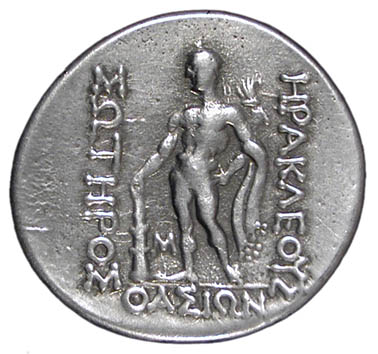
| "Pot Metal." This is a fairly convincing cast counterfeit, likely made of pot metal, an alloy sometimes created by the actual melting of old pots. It can consist of tin, lead, and copper. This piece has no visible edge seam, and the casting pits are small. The toning is fake and has an odd maroon tint to it. 15.0g, 33mm. | |||||
|
|
 |
||||
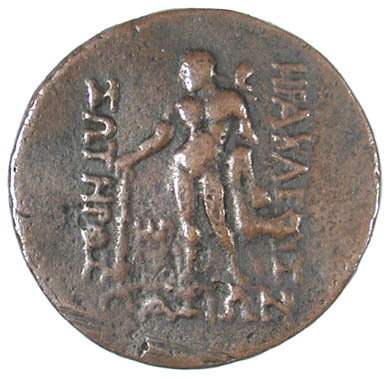
| "Lead Boy." Here's an obvious cast counterfeit made from a seed coin of the same obverse variety as the above pot metal fake. This fake's indistinct details, pitted surfaces, and light weight give it away. From the feel of the metal, it's likely a lead alloy. 13.9g, 33mm. | |||||
|
|
 |
||||
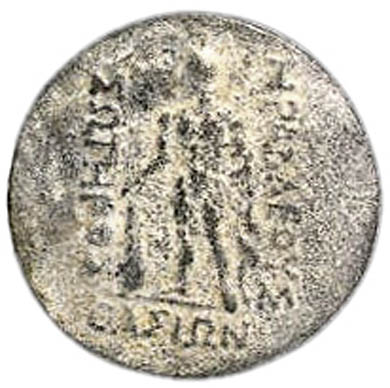
| "Bronze Baby." This is an obvious tourist fake, made of bronze instead of silver and designed to fool tourists and other inexperienced buyers. Ancient coins of a similar obverse design from Maroneia were commonly struck in bronze, but not those from Thasos. The details of the coin's surfaces are soapy, not sharp, and casting bubbles are visible under magnification. The edges have been filed. 14.0g, 32mm. | |||||
|
|
 |
||||
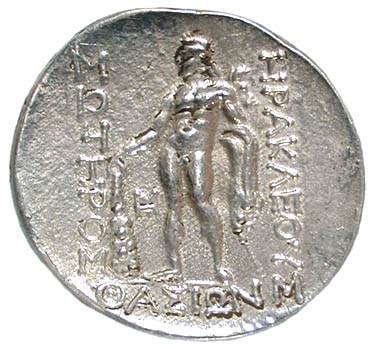
| "Powder Puff." This is another tourist fake, a cast counterfeit of a Thasos tetradrachm. This piece has a soapy surface, indistinct details, pitted surfaces, and powdery fake toning, and though the correct size it's significantly underweight. It appears to be made of bronze. 10.7g, 32mm. | |||||
|
|
 |
||||
| "Mesh Mess." This cast fake has a strange mesh pattern over its surfaces that may have been caused by the use of a cloth over the molding material to prevent the original coin from sticking to it. The edges appear to have been filed to remove the seam. This lightweight fake is made of silver -- it rings when it's tapped. 11.0g, 32mm. | |||||
|
|
 |
||||
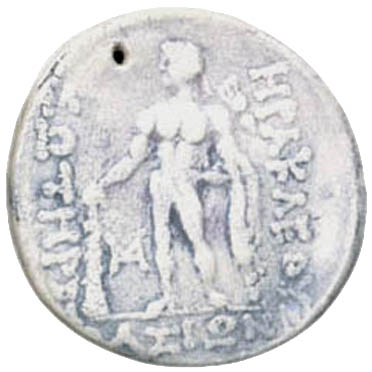
| "Sousek." This is an Antiquanova replica, made in the Czech Republic. The piece is pressed and consists of .999 fine silver. The "S" countermark on the reverse stands for Petr Sousek, the engraver. Antiquanova, along with the Bulgarian Slavey Petrov, makes the finest ancient coin replicas today. 17.2g, 33mm. | |||||
|
|
 |
||||
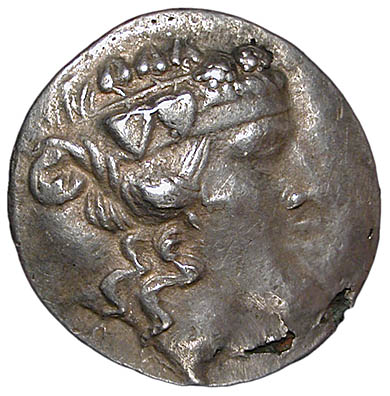
| "Clay Man." Here's a modern replica, made out of clay and intended for jewelry, as evidenced by the hole in the flan above Dionysos' head. It was made in Turkey by Bekircan Tahberer, who sells ceramic replicas of this and other ancient coins and jewelry made from them very inexpensively. 3.6g, 31mm. | |||||


Other glomworthy coins:
Coin sites:
Coin Collecting: Consumer Protection
Guide
Glomming: Coin Connoisseurship
Bogos: Counterfeit Coins
Pre-coins
© 2013 Reid Goldsborough
Note: Any of the items illustrated on these pages that are in my possession are stored off site.